
E-Learning
22 articles in this topic.
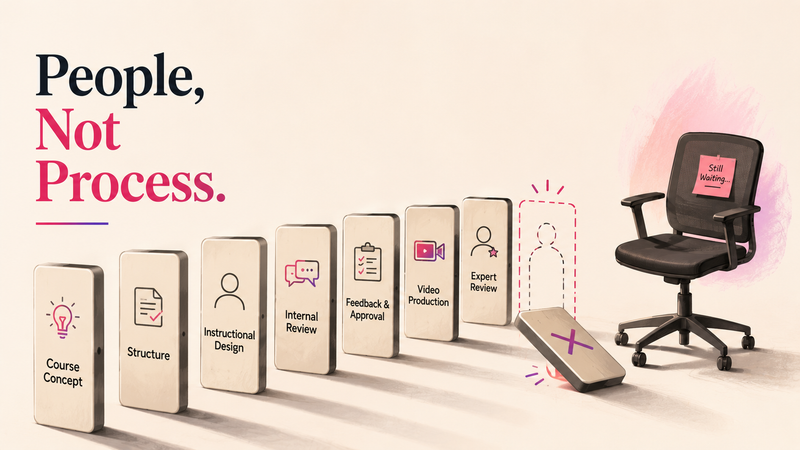
When an E-Learning Project Breaks, It Is Never the Process
When a large e-learning build misses its deadline, it is almost never the process that failed. It is the people, and specifically their availability. Here is why.

The Subject Matter Expert Validates the Content. Someone Else Decides What to Do With That.
What the structural separation between subject matter expert input and production implementation means for course quality, and what the handoff between the two requires to prevent expert contribution from getting lost.
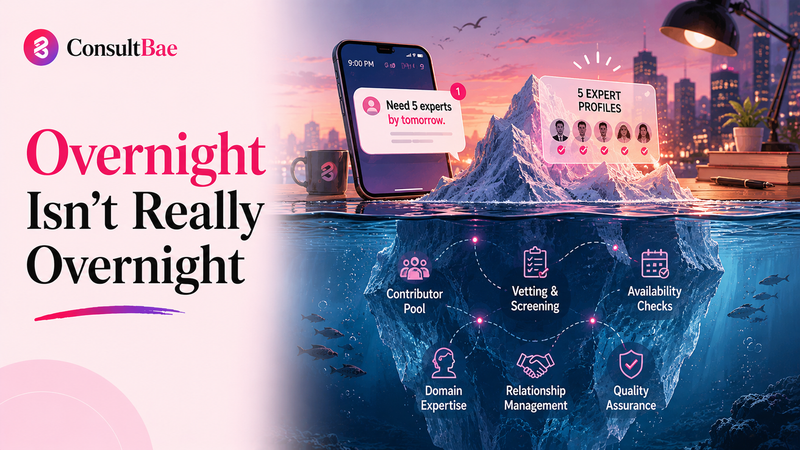
The Client Calls the Day Before the Proposal Is Due. We Still Have to Deliver.
What it means to always be the last link in a production chain you had no input into setting, and how to build sourcing infrastructure that absorbs compressed timelines without making quality the casualty.

Most Course Instructors You See on Screen Are Not the Experts Who Built the Course.
What the production split between subject matter expert delivery and professional talent delivery actually looks like, why both exist, and how to decide which is right for a specific course.
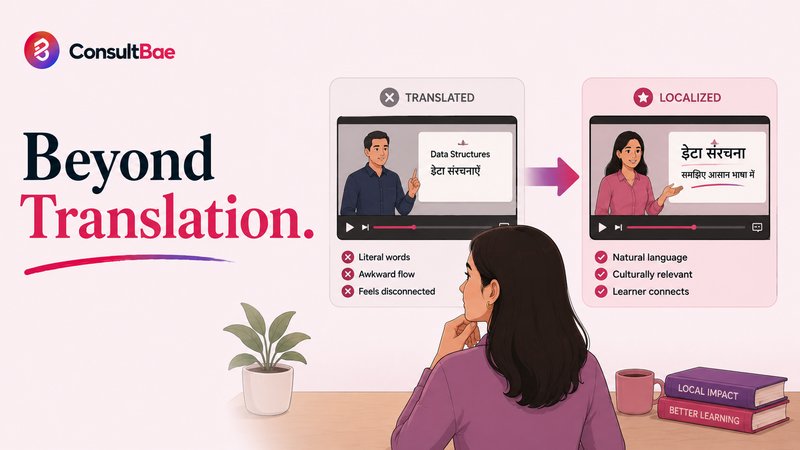
Translating a Course Is Not the Same as Localising One.
What it actually takes to make a certification course work for a learner in a different language, and why the production challenge is harder than simply handing the script to a translator.

Two People. 100 Contributors. 247 Courses. Here Is What We Learned.
What the first large e-learning production project with no team, no playbook, and no prior experience taught us about operational resilience and what it actually takes to deliver at scale.

The Fastest Way to Lose a Good Subject Matter Expert Has Nothing to Do with the Content.
Why payment management is not administrative overhead in e-learning production but a direct determinant of whether your best contributors stay engaged, deliver revisions, and come back for the next project.
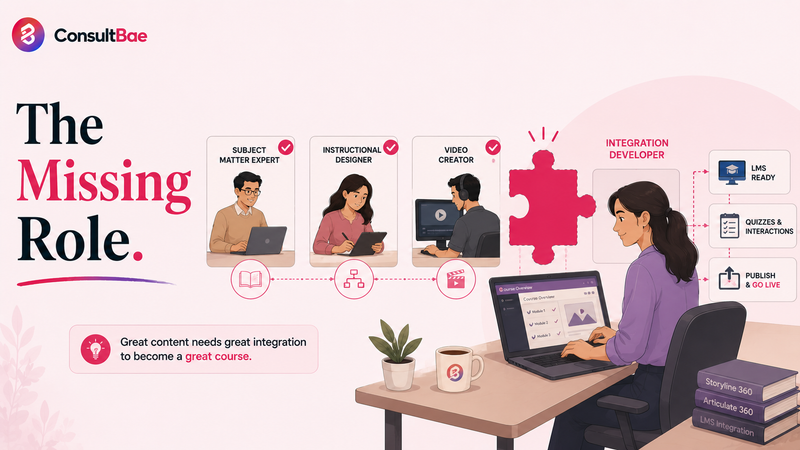
Everyone Hires the Subject Matter Expert. Nobody Plans for the Person Who Puts the Course Together.
The course integration developer is the production role most clients forget until the course is finished and nothing is live. What this role actually does, and how to plan for it before it becomes an emergency.

Most E-Learning Projects Don't Fail on the Content. They Fail on the Agreement.
What a well-structured e-learning engagement looks like from a process and documentation standpoint, and why the bilateral agreement between platform, capacity partner, and freelancer is the infrastructure nobody talks about.

The E-Learning Vertical Didn't Come from a Strategy Deck. It Came from a Client Call.
How ConsultBae's third business vertical grew not from a planned expansion but from solving the next problem an existing client brought through the door. What that teaches about organic growth.

The Best Subject Matter Experts Are Not in It Only for the Money.
What motivates an industry professional to spend their evenings validating certification content, and why the platforms that understand this source better contributors than those that don't.
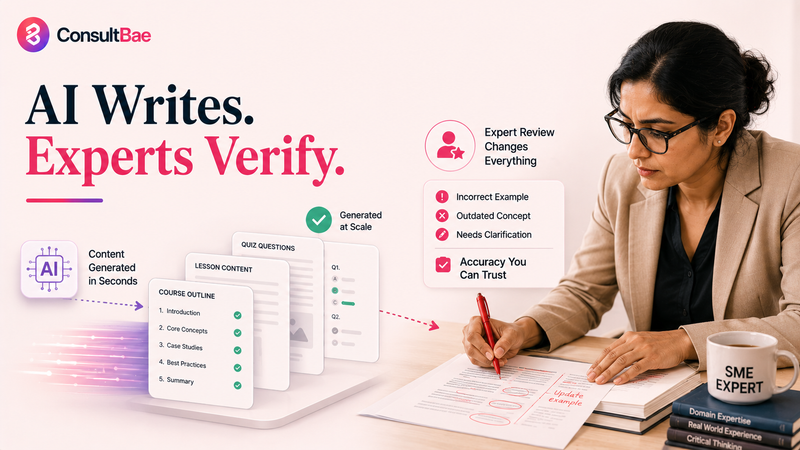
AI Is Writing the Course. Humans Are Still the Most Expensive Part.
How AI-generated content changed what e-learning platforms need from subject matter experts, and why finding the right ones just got harder, not easier.
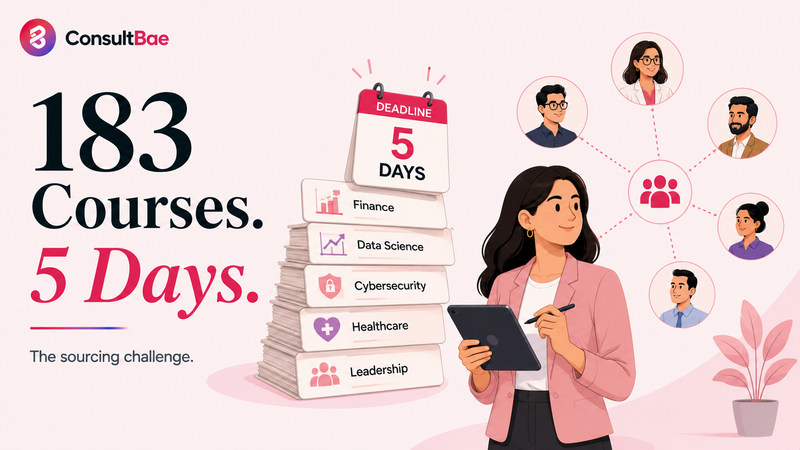
183 Courses, 5 Days, and the Sourcing Problem Nobody Talks About
Why the hardest part of e-learning course production isn't writing the content. A look at the sourcing pipeline problem every platform quietly faces.
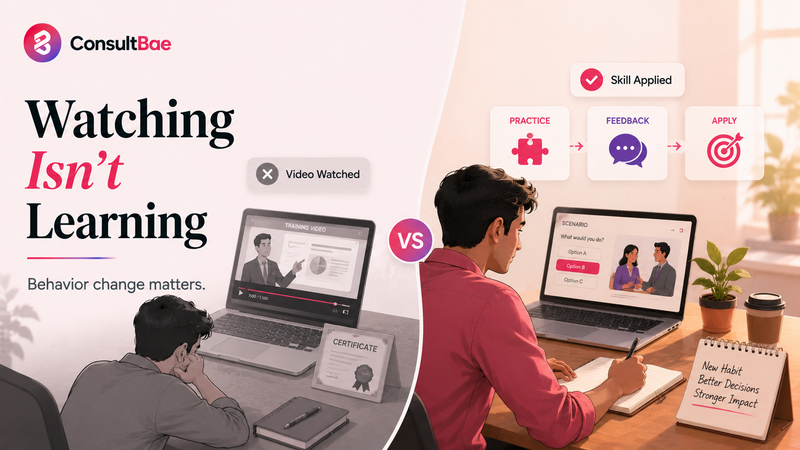
The Architecture of Behavior Change: Moving Corporate Learning Beyond Passive Video Consumption
Simple information delivery does not translate to technical capability. Building resilient workforces demands data-driven instructional paths designed for long-term retention.
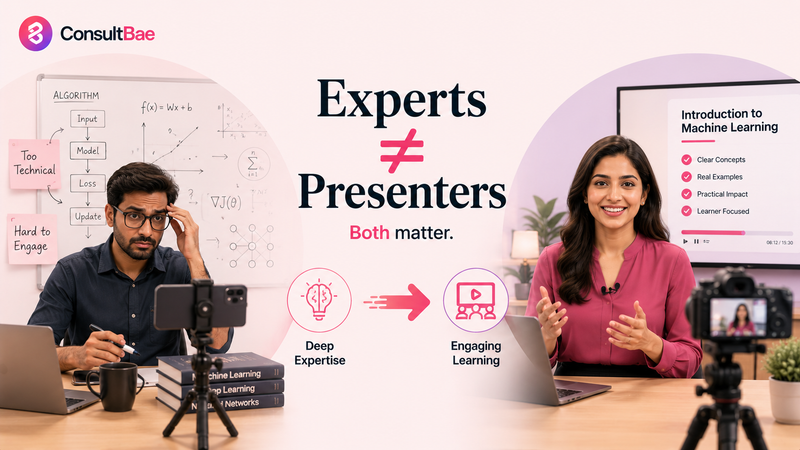
Bridging the Gap Between Technical Expertise and On-Camera Performance
Your best technical minds are rarely professional educators or on-camera talent. Scaling an educational curriculum requires a model that decouples knowledge from delivery.
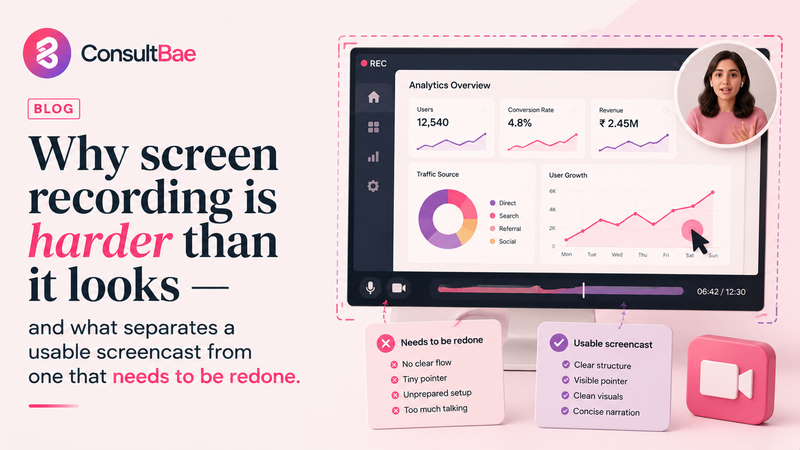
Why screen recording is harder than it looks, and what separates a usable screencast from one that needs to be redone.
A screencast looks like the easiest part of a course to produce. It is almost always the part that gets sent back for re-recording. Shivani Agarwal on what separates a screencast that teaches from one that just records.
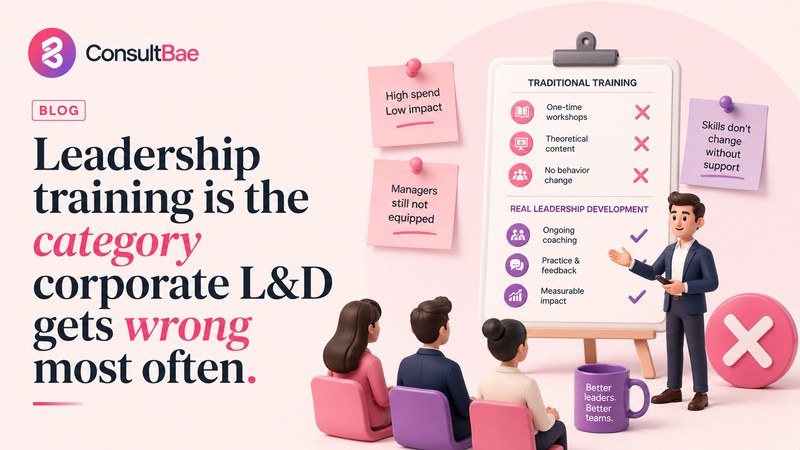
Leadership training is the category corporate L&D gets wrong most often.
Companies invest in leadership training because they need better managers. The training they buy almost never produces them. Shivani Agarwal on the pattern, the causes, and what actually develops leadership capability.
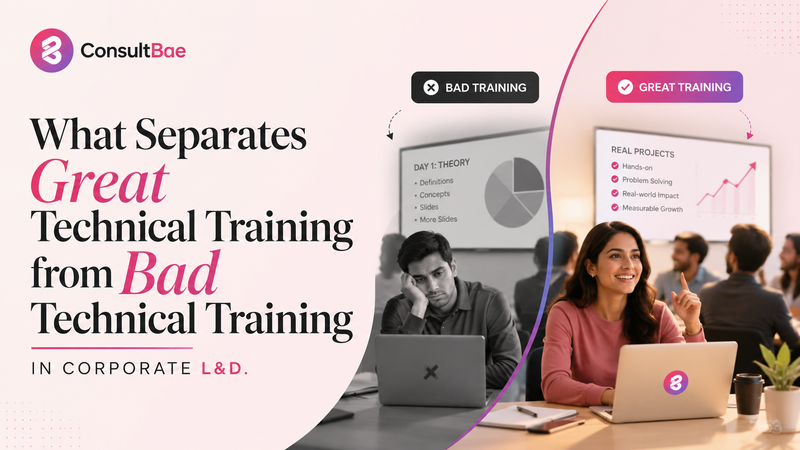
What separates great technical training from bad technical training in corporate L&D.
The technical skill gap costs companies more than they admit. The training they buy to close it usually does not. Shivani Agarwal on why technical training fails so often and what actually works.
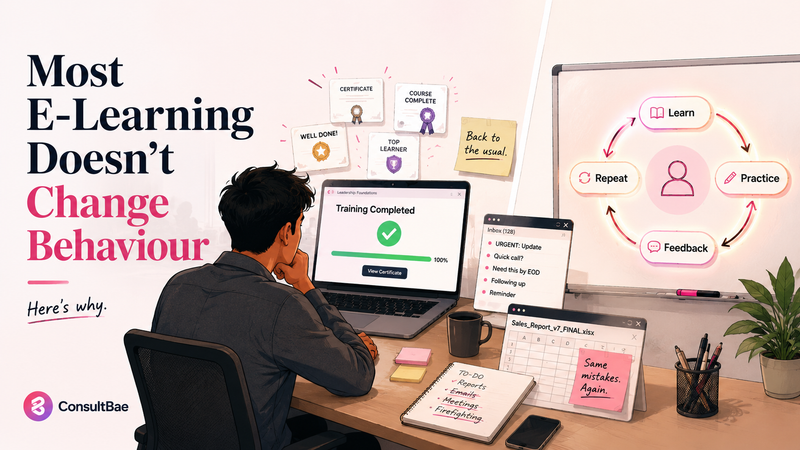
Why corporate e-learning rarely changes behaviour, and what to do about it.
A completed course is not the same as a changed behaviour. Shivani Agarwal on why most corporate e-learning stops at completion and what programmes that actually shift behaviour look like.
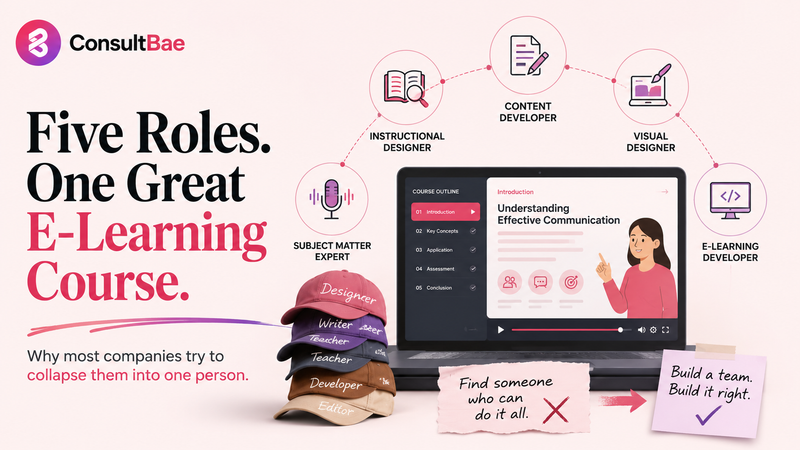
The five roles that go into building one good e-learning course, and why most companies try to collapse them into one person.
Building a good e-learning course requires five distinct roles. Most companies try to find one person to carry all of them. Shivani Agarwal on why that does not work and what each role actually requires.
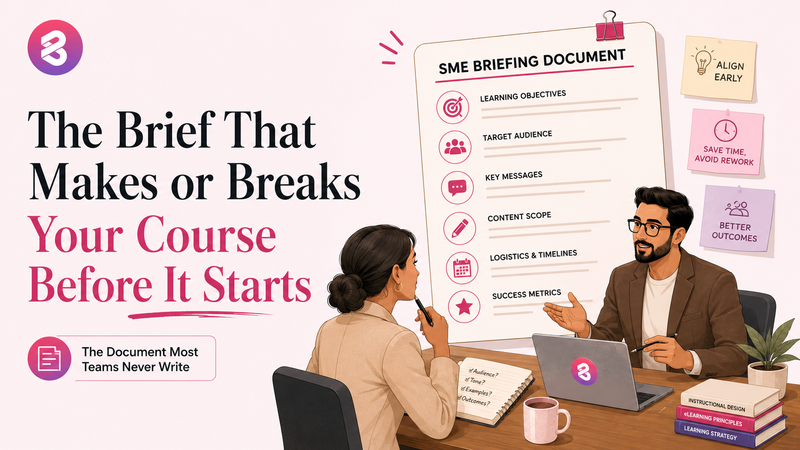
How to brief a subject matter expert before course production starts: the document most teams never write.
Most e-learning projects go wrong before production starts. Shivani Agarwal on the briefing document that prevents it and what it must contain.

Subject matter experts often make bad course creators. Here is how to fix that without replacing them.
The deeper someone knows their subject, the harder it usually is for them to teach it. Shivani Aggarwal on why subject matter experts struggle with course creation and how the right production layer fixes that without removing them from the process.