
Notes from the people who run the work
How data projects, hiring and corporate learning are scoped, staffed and delivered, and where they break. Written by the people doing it.

Is It the Tool, or the Team?
When work stops getting done on a data project, most managers diagnose a training problem. A people problem is a category of cause, not a category of solution, and confusing the two is expensive.

Embodied Data Has an Expiry Date.
Text and image data keeps its value indefinitely. Embodied task data does not. Why the window for collecting physical AI training data is narrower than most buyers assume.
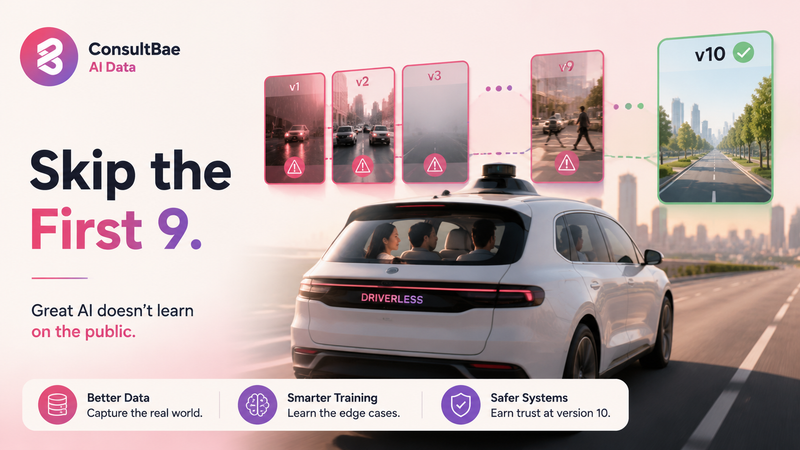
Nobody Wants to Ride in Version One.
Every safety critical AI system has a version one. Training data is how you get to version ten without making the public ride through the first nine.
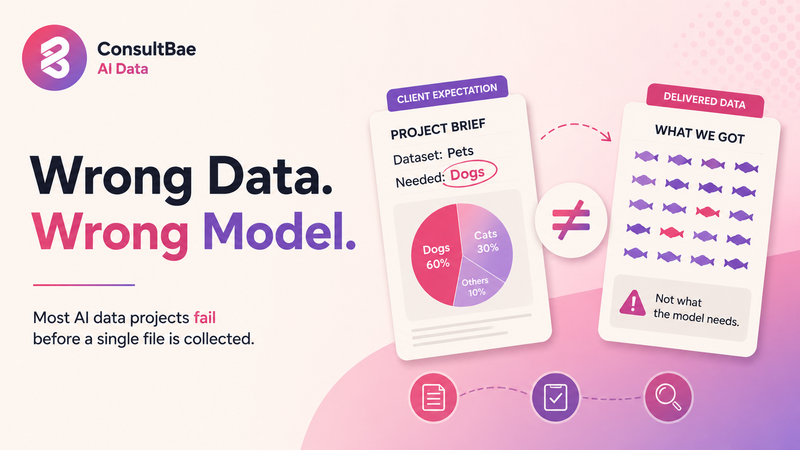
The Client Wanted Dogs. You Sent Cats.
Most AI training data projects do not fail on labelling skill. They fail because nobody agreed what the dataset was supposed to contain before collection started.
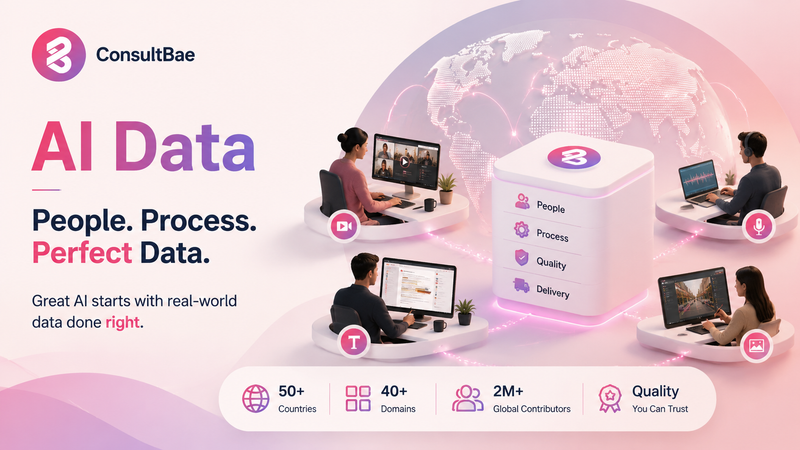
Everyone Thinks AI Data Is a Tech Problem. It Is Mostly Not.
People assume a company that cleans and annotates AI training data must be a tech company. After building one, the founder's honest answer is that it is not.

When an E-Learning Project Breaks, It Is Never the Process
When a large e-learning build misses its deadline, it is almost never the process that failed. It is the people, and specifically their availability. Here is why.
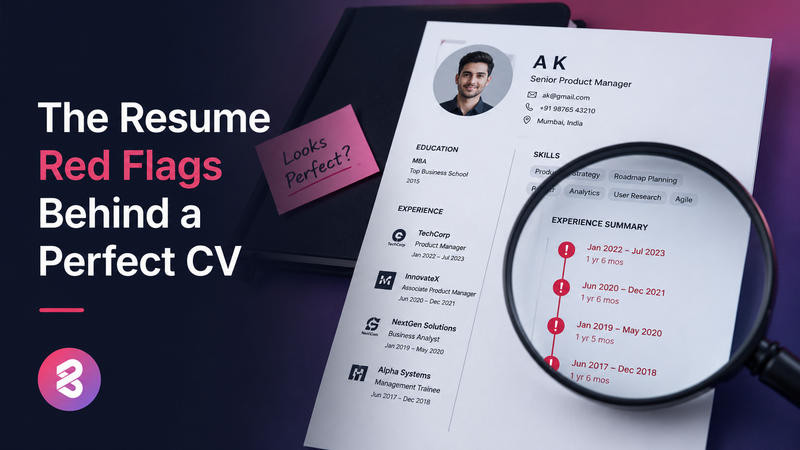
The Resume Red Flags That Hide Behind a Perfect CV
The most dangerous resume is not the weak one. It is the flawless one. Here are the resume red flags that hide behind elite brand names and clean formatting.

Why Startup Hiring Breaks Down Over the Perfect Candidate
Founders ask for a flawless 10-on-10 who performs from day one. After four years of startup hiring, that exact demand is what keeps the role open.

Why Autonomous Vehicle Training Data Is So Hard to Get Right
Self-driving models don't fail on ordinary miles. They fail on rare moments, and that is the autonomous vehicle training data hardest to capture and label.
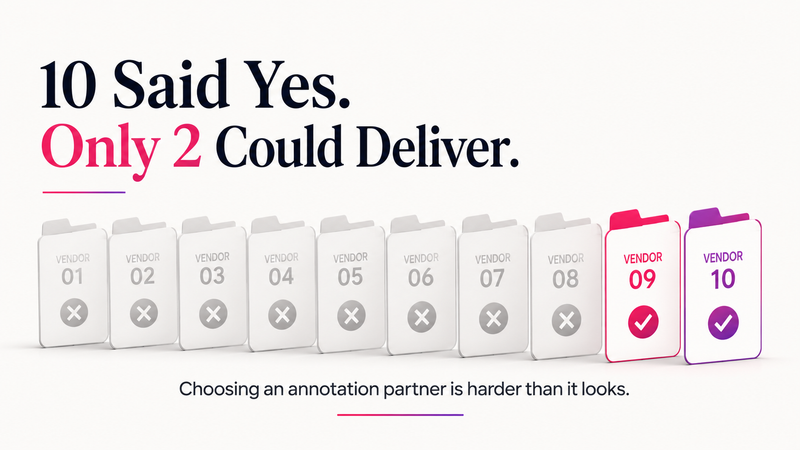
What the Best Data Annotation Companies Actually Have in Common
Ranked lists won't tell you which data annotation company can actually deliver. Here are the five things that separate the best from the rest.

Why You Can't Get a Straight Answer on Data Annotation Pricing
Two vendors can quote 5x apart for the same data annotation project. Here is what actually drives the price, and how to read a quote fairly.

I Don't Like Managing People. So I Built a System That Does It for Me.
What a fully automated data annotation quality control pipeline looks like when one person builds it from scratch, and why automation was never about efficiency. It was about not losing my mind.

What Is Physical AI? And Why It Needs Different Data.
Physical AI is the next wave of model training demand. Here is what it actually means, why the data requirements are fundamentally different, and what the companies building it need right now.

We Close Roles at 3x the Speed of a Standard Recruitment Process. Here Is What That Actually Requires.
What a genuine throughput advantage in recruitment looks like structurally, why faster is not the same as better, and how to evaluate a speed claim before committing to a process built around it.

The Subject Matter Expert Validates the Content. Someone Else Decides What to Do With That.
What the structural separation between subject matter expert input and production implementation means for course quality, and what the handoff between the two requires to prevent expert contribution from getting lost.

Some Hires Fill a Role. Some Hires Are Hired to Build One.
What a function-driver hire actually requires that a standard operational hire does not, and why getting this distinction right is one of the most consequential decisions in a growing services business.

The Cheapest Per-Item Rate Is Usually the Most Expensive Dataset.
What per-unit commodity pricing in AI data services excludes, and how the costs stripped from the quoted rate reappear later in rework, delays, and model performance issues.
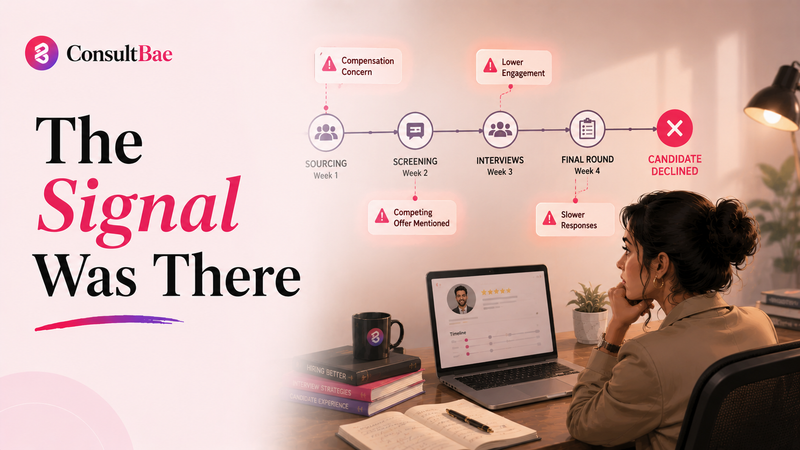
The Candidate Declined at Offer Stage. You Lost Three Weeks for a Reason That Was Visible in Week One.
What causes late-stage candidate declines, why the signals are almost always present before the decline, and how a well-run process catches them early enough to change the outcome.

The First Client Came Through a Relationship. The Second One Has to Come Through Results.
Why winning the second client in a specialist vertical is structurally harder than winning the first, and what the operational track record built with client one needs to produce before client two is a realistic conversation.

Finding a Hundred Contributors Is the Easy Part. Getting Them to Annotate Correctly Is Where Projects Break.
Why annotation quality is an independent operational function from contributor sourcing, what it requires that sourcing does not, and how conflating the two produces the quality failures that show up in model training.