

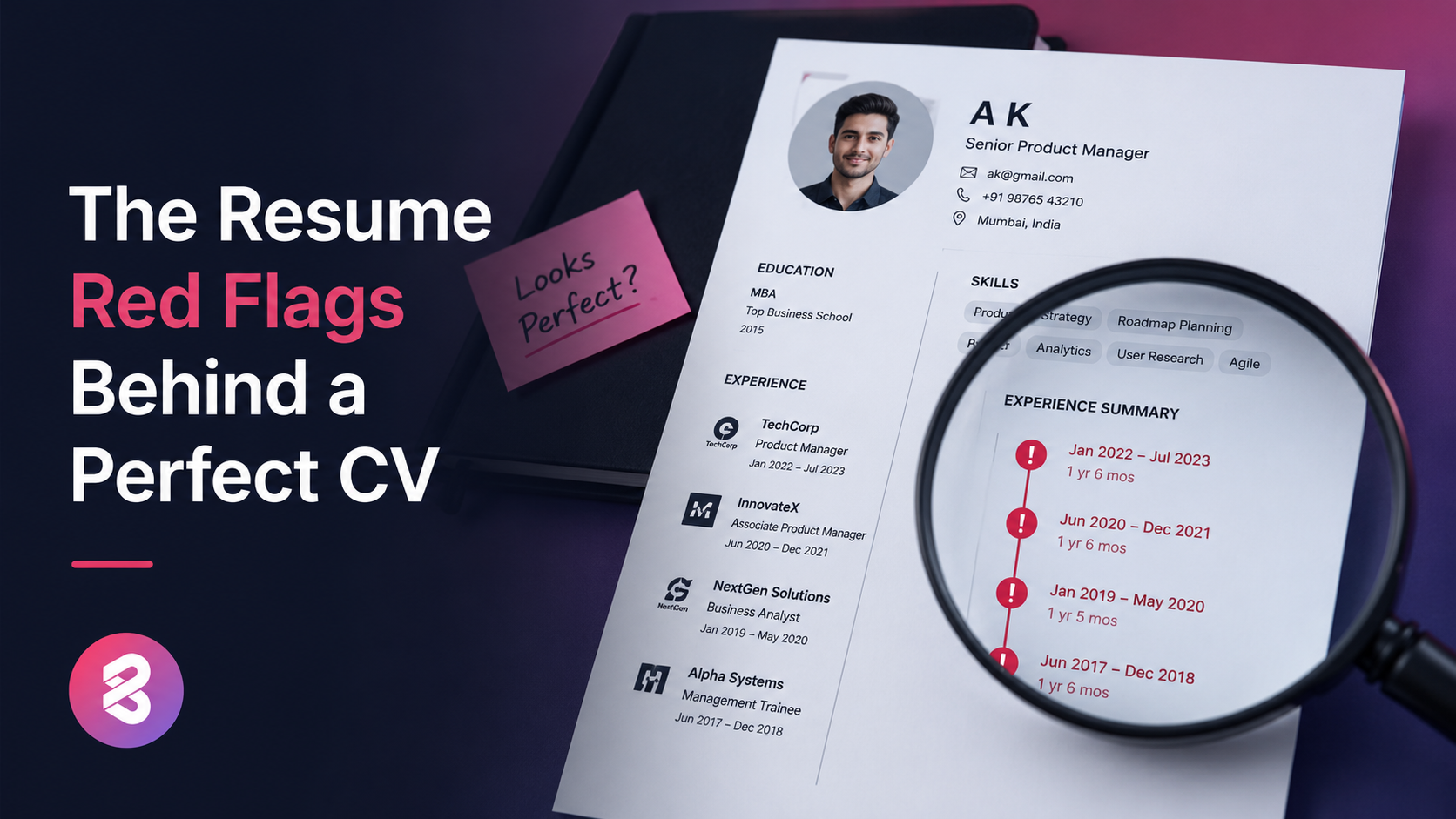
A while ago I was going through a resume that looked close to perfect. Every company on it was one of the names you would recognise instantly, the kind of logos that make you sit up. My first instinct was that we had found the candidate. Then I looked at the dates.
The person had switched roughly every eighteen months. Sometimes sooner. The brands were the green flag, the thing pulling me in. The tenure was the red flag, and it was sitting right underneath, in the same lines, hoping I would be too impressed to notice. That is the trap with a strong resume, and after four years of startup hiring it is the one I warn founders about most.
The green flag that is actually a red flag
Elite company names do a lot of work on a resume. They signal that someone else, someone selective, already vetted this person, so we relax. But a great logo attached to a short stay is not a credential, it is a question. Why did such a strong candidate leave a place most people fight to get into, and why did it happen again, and again, every year and a half?
Sometimes the answer is fine. Sometimes it is not. The point is that the brands and the job-hopping are two signals pointing in opposite directions, and you cannot let the brighter one hide the other. A resume can carry a green flag and a red flag in the very same line, and the more impressive the green, the easier it is to miss the red.
Why a flawless resume should make you slower, not faster
Founders are usually hiring for a role that is already on fire, so a resume that looks perfect feels like relief. The natural urge is to speed up. My experience says do the opposite. The candidate who looks flawless on paper is exactly the one whose real fit you have not tested yet, because nothing on the page tells you the thing that actually decides the hire.
A polished resume tends to lower your guard at the precise moment you should raise it. The stronger it looks, the more deliberately I want to understand what is behind it, because the failures that cost the most are almost never the candidates who looked risky. They are the ones everyone was sure about.
What a resume can never show you
When you screen a salesperson, the resume shows you their pitch, the connects they have built, the revenue they generated somewhere else. All of it is real, and all of it happened at a different company, selling a different product, to different clients. What the resume cannot show you is how that person will feel about your product, and how they will actually work with your clients, once they are inside.
That gap is where a lot of paper-perfect hires quietly come apart. The candidate is genuinely capable and the company is genuinely good, but there is a mismatch in interest or in working style that no CV could have surfaced. It only appears after joining, which is far too late to discover it. So I treat a resume as evidence of what someone has done, never as proof of how they will fit.
The brands were the green flag. He had switched every eighteen months. That was the red flag, sitting in the same line.
The strong candidate who looks weak on paper
The trap also runs the other way, and this one costs founders good people. Plenty of candidates know exactly how to do the job but do not know how to present it. A person can be excellent at the actual work, then walk into an interview and forget half of what makes them good.
If you judge only by the resume and the first ten minutes, you will pass on people who would have been among your strongest hires. Part of my job is to see past that, to understand what a candidate can really do and, honestly, to help them present it so a nervous interview does not bury a genuinely capable person. A weak-looking resume is as much a reason to look closer as a flawless one.
How to read the person, not the page
None of this means resumes are useless. It means the resume is the start of the conversation, not the verdict. The reading that matters happens after it.
Be blunt about the role early, so a candidate understands the real work and any mismatch surfaces before they join rather than three months after. Ask why the moves on the resume happened, especially the impressive ones, instead of being reassured by the logos. And weigh what the page cannot show, genuine interest in your product and the willingness to be coached, more heavily than the brand names that made you want to say yes on sight. The resume gets a candidate into the room. Whether they belong there is something only you can read.
Check tenure before you are dazzled by the logos. Elite brands with repeated sub-two-year stays are a question, not a credential.
Ask why each impressive move happened. The strongest resumes deserve the most curiosity, not the least.
Remember the resume shows past performance elsewhere, not fit with your product. That only shows after joining, so probe it in conversation.
Do not let a nervous interview bury a capable person. Some of the best candidates present themselves worst.
About the author
Anjali Kandhari leads recruitment at ConsultBae, where she has spent four years building startup teams across tech and non-tech roles. She has read enough resumes to trust the conversation over the page.
A resume gets them in the room. We tell you who belongs there.
Every candidate we send has cleared two layers of screening, so you spend your time on people worth hiring, not on reading past polished CVs.
Talk to our recruitment team