A sophisticated language model trained entirely on standard, textbook speech patterns often performs flawlessly in laboratory testing. Yet, when that same model is deployed onto a localized logistics floor in Southeast Asia or a customer support hub in Latin America, it frequently freezes. The reason is simple: real human beings rarely communicate in grammatically perfect syntax. They rely heavily on regional shorthand, industry-specific jargon, and shifting structural accents that govern the actual speed of daily business operations.
To successfully cross the chasm from experimental code into enterprise production, development teams cannot rely on generic, pre-trained safety datasets purchased from a digital marketplace. Attempting to force literal, direct translations onto nuanced regional environments ultimately degrades user trust and operational efficiency. Achieving true compliance and precision requires an entirely different operational approach, one rooted in targeted human-in-the-loop validation teams that are explicitly assembled from highly specific socio-economic and demographic subsets.
The Fragility of Clean Academic Language Data
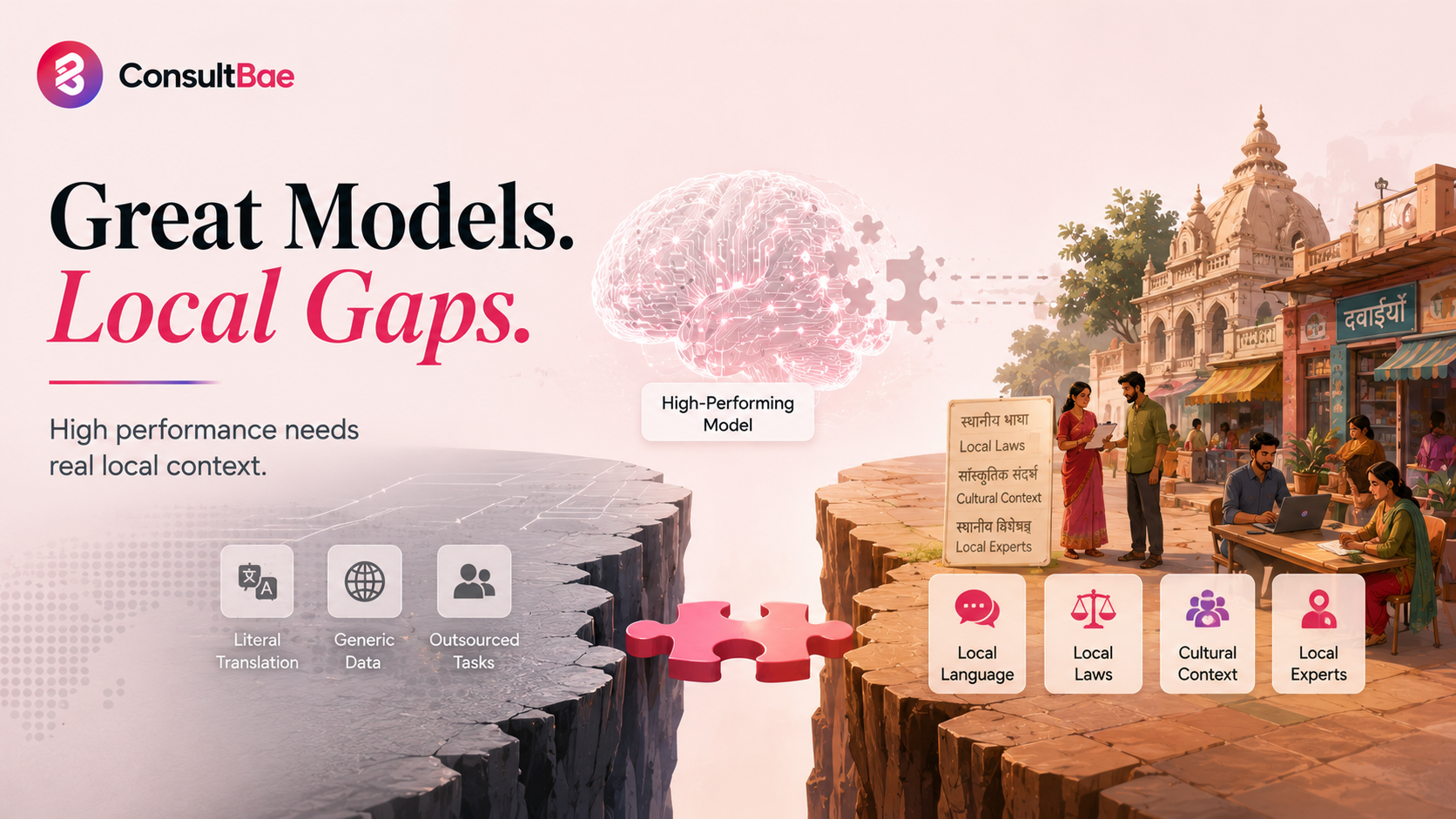
The gap between clean academic training data and chaotic real-world deployment is often referred to as model drift. In a controlled environment, an AI processes clean audio files or structured text scripts. On the ground, however, it must filter out ambient noise while simultaneously decoding hyper-local idioms that do not exist in standard dictionaries. If an enterprise relies purely on scraped digital data, the resulting model will inevitably lack the cultural elasticity required to function in a live, localized setting.
This operational friction is particularly obvious when handling non-Latin scripts or regions with high dialect density. A literal translation algorithm might perfectly convert the individual words of a localized sentence, but entirely miss the underlying semantic intent or cultural taboo. Overcoming this gap means shifting the data strategy away from mere volume accumulation and focusing heavily on the structural authenticity of the human inputs feeding the system.
"You cannot solve a socio-linguistic gap with a better algorithm. You solve it by putting the right native experts in the loop before the model ever starts training."
Building Demographic Firewalls for Complex Script Compliance
Preventing algorithmic bias and ensuring localized compliance requires building what we call demographic firewalls. This process involves setting explicit crowd annotation matrices before a single piece of data is collected. Instead of casting a wide, untargeted net across the internet, data logistics teams must map out the specific age ranges, regional backgrounds, and industry expertise required to create a truly representative dataset.
By establishing these strict contributor boundaries, an enterprise ensures that the incoming data stream accurately reflects the demographic reality of the target market. This structured approach catches nuanced errors that automated translation tools miss, effectively removing structural algorithmic bias before the final training runs execute. The result is a highly compliant dataset that models can trust without requiring massive, expensive post-training corrections.
• Define explicit regional and socio-economic target constraints.
• Verify contributor backgrounds through localized institutional networks.
• Implement multi-layered, native-speaker validation loops to catch semantic drift.
Orchestrating Localized Ground Truth at Scale
Executing this level of demographic precision across multiple countries simultaneously is a severe logistical challenge. Managing localized data acquisition requires more than software; it requires deeply rooted regional infrastructure. By leveraging targeted institutional networks and community organizations across the globe, an enterprise can deploy custom validation hubs precisely where they are needed.
This localized ground truth ensures that every audio recording, image label, and text annotation is culturally verified by individuals who actually live and work in the target environment. When you integrate these specialized local crowd hubs with centralized quality tracking, you provide deep-tech developers with the exact, bias-free assets they need to build models that perform flawlessly in the real world.
Deploy Bias-Free Regional Datasets
Protect your AI models from real-world localization failures. Partner with ConsultBae to deploy targeted demographic validation networks across any global market.
Connect with Us