The initial generation of voice-activated systems and speech-to-text engines relied on clean, highly orchestrated datasets. Contributors sat in controlled, quiet spaces, reading explicit text scripts directly into high-fidelity microphones. This structured approach generated tidy, easily processable datasets that taught basic models how to interpret distinct, isolated commands. However, when these same models are deployed into enterprise settings, they routinely break down. Real human communication does not follow a clean script; it is a chaotic mix of natural interruptions, abrupt changes in pacing, overlapping statements, and shifting emotional tones.
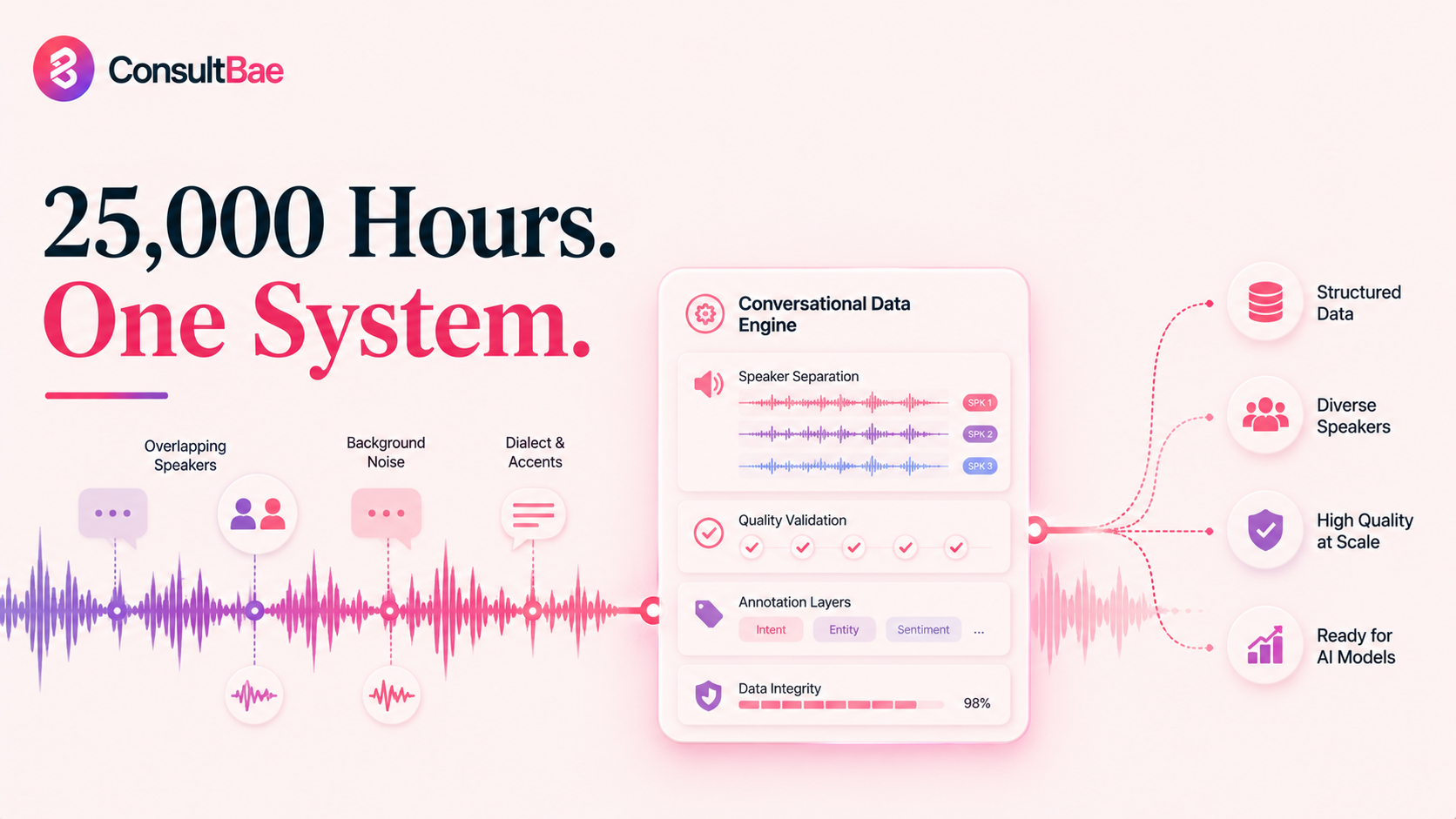
To train advanced conversational intelligence, modern deep-tech groups are abandoning clean audio assets, shifting heavily toward high-volume, completely unscripted conversational multi-party data. Scaling this collection process across more than twenty-five thousand hours of authentic, real-world dialogue requires an immense operational effort. You are no longer managing static text; you are capturing the messy, organic realities of human interaction across multiple acoustic environments, distinct regional dialects, and varying demographic groups while ensuring absolute consistency across the resulting metadata.
The Difference Between Scripted Prompts and Real Dialogue
When an artificial intelligence model encounters authentic human interaction in a production environment, it faces challenges that standard training data cannot prepare it for. In real dialogue, individuals rarely speak in complete, grammatically perfect sentences. They stutter, leave thoughts half-finished, use informal regional phrasing, and frequently talk over one another. If a model is trained solely on sterile, read-out-loud prompt scripts, it will struggle to accurately parse the basic meaning of a natural, multi-party business call or customer service conversation.
Capturing authentic dialogue requires gathering spontaneous, unscripted interactions between real people. This means setting up open scenarios where contributors engage in natural dialogue regarding everyday situations, complex technical problems, or regional case studies. The resulting audio data is filled with linguistic anomalies, sudden shifts in volume, and varied pacing. While this structural messiness is exactly what a modern machine learning model requires to build real-world resilience, it presents a massive tracking challenge for data quality and annotation teams.
"Human speech does not happen in a silent box. Training an AI to understand a real conversation means collecting and validating the actual audio environments where people live and work."
Managing Acoustic and Environmental Noise Variables
A major obstacle when processing large volumes of unscripted audio data is managing the acoustic environment where the interactions take place. True conversational intelligence must learn to perform outside of studio conditions, meaning that training assets must intentionally include real-world background noise. Sourcing these assets requires deploying contributors across diverse physical settings, ranging from quiet home offices to busy corporate environments, crowded transit hubs, and outdoor regional markets.
Operating across these varied environments requires a balanced approach to technical quality control. If the background noise is too overwhelming, the audio asset becomes useless for speech model training; if it is too silent, the model fails to build real-world noise resilience. Our data vertical manages this balance by using structured mobile tracking and clear recording parameters across our international crowd network. Every single audio file is analyzed for clear vocal presence, bit-rate consistency, and balanced acoustic properties, ensuring that the final training asset contains the realistic environment variables necessary for model optimization.
• Acoustic Validation: Filtering out extreme distortion while preserving natural ambient environments.
• Lexical Transcription: Mapping natural speech anomalies, overlapping voices, and regional accents.
• Intent Tagging: Labeling structural turns, semantic meaning, and conversation flow changes.
Structuring the Multilayer Annotation Framework
Transforming twenty-five thousand hours of raw, unscripted audio into high-yield training data requires a multi-layered, systematic annotation workflow. Simple text transcription covers only a fraction of what an advanced model needs to learn. To fully map out multi-party speech dynamics, annotation teams must process multiple layers of analytical metadata simultaneously, transforming raw soundwaves into highly structured machine-readable knowledge.
Our annotation pipeline breaks this process down into three distinct verification phases. First, expert transcribers document the literal spoken words, capturing every vocal error, pause, and regional idiom exactly as delivered. Next, our annotation teams execute precise time-stamping to isolate overlapping talk and separate individual speakers across the audio timeline. Finally, native language experts add semantic context layers, tagging underlying speaker intent, local cultural expressions, and emotional tones. This deep, multi-tiered approach allows us to deliver pristine, enterprise-ready speech datasets that help deep-tech innovators build conversational tools capable of navigating the real world.
Scale Your Multi-Modal Datasets
From thousands of hours of unscripted conversational audio to millions of complex image assets, ConsultBae provides the end-to-end human data infrastructure your enterprise requires.
Connect with Us