

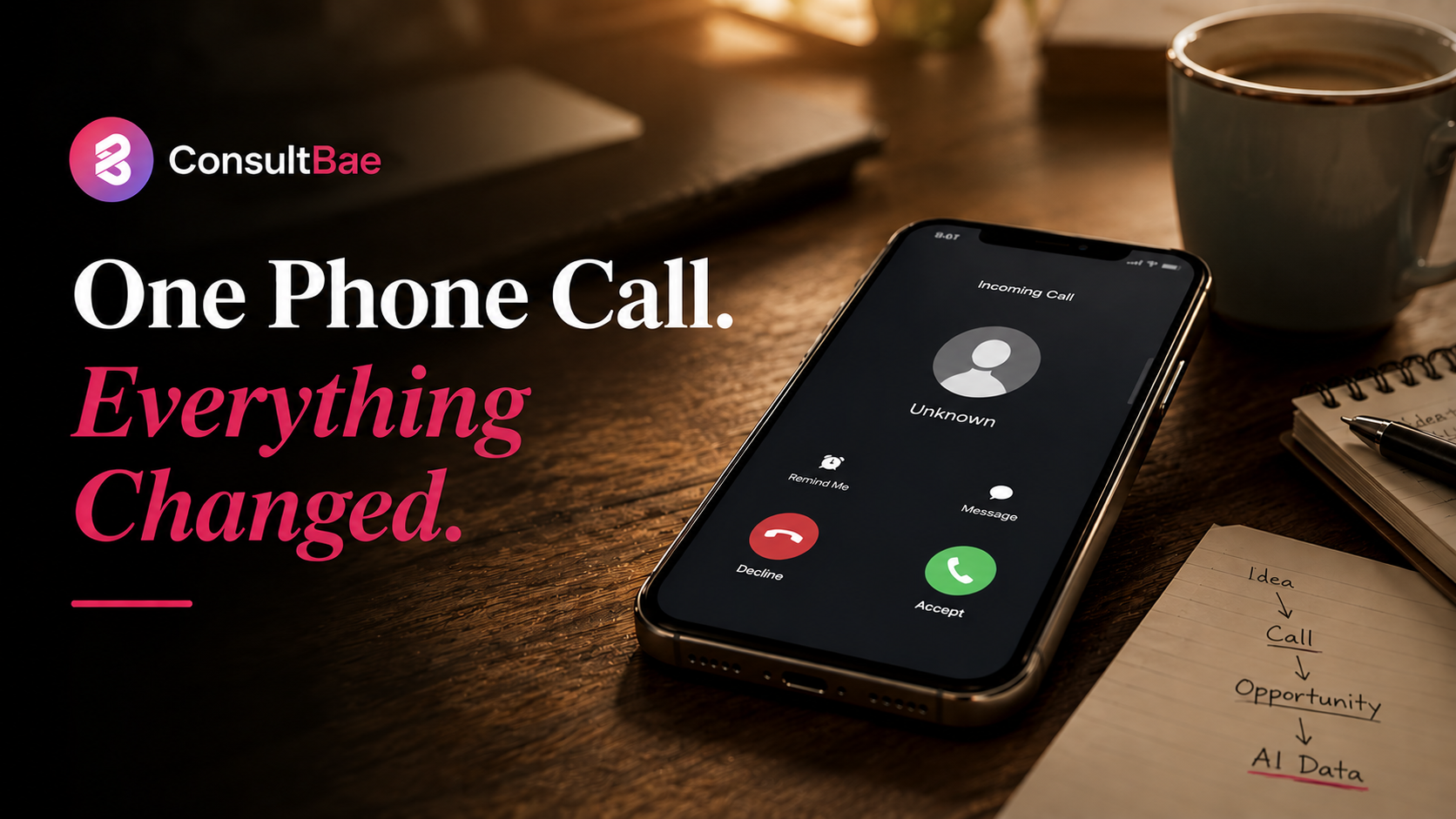
The call came through a reference. Someone I did not know, introduced through a friend of a friend. He said he was looking for 100 people who could speak specific Indian languages: Marathi, Bengali, Kannada, Telugu, and two more. Each person needed to press a button on a phone, read whatever appeared on screen, and record one hour of audio. Simple task. One hour per person.
I did not know what AI data collection was at that point. I had a recruitment business. We had spent years building a database of two million candidates and a team that knew how to find and mobilise people quickly. What this caller was describing sounded strange, but it was not complicated. Find people who speak these languages. Get them to record for an hour. That much I knew how to do.
I said yes. Ten days later, we had delivered more than 200 recordings across all six languages. The client was surprised. Not because the task was hard, but because most people he had approached could not move at that speed. We could, because we already had the infrastructure. We just had not used it for this before.
I said yes before I fully understood the job. That decision built an entire vertical.
The ask that actually changed everything
If the story had ended there it would have been a one-off project. What made it a business was what came two weeks later. The same client came back with a different ask. He needed 350 resources across 20 countries. Some in Asia, some in Southeast Asia, some in Europe. Same type of task, same format, completely different scale.
We had never done anything outside India. We had no existing network in any of those countries. The honest answer would have been: we cannot do this. Instead I told him we had not done it before but we would figure it out.
What followed was three and a half months of building from scratch. We reached out to professors at universities in each target country. We found small local organisations that worked with communities of language speakers. We connected with NGOs. We identified freelancers and crowd workers who could be mobilised quickly. Country by country, we assembled the coverage we needed.
It was not clean. Every country had a different set of challenges: different platforms people used, different trust barriers to cross before someone would agree to participate, different languages for our own coordination. We had to figure out how to manage quality across contributors we had never worked with before, in places we had never operated in before, on a timeline that did not leave much room for error.
We completed the project. That delivery, more than the first one, is what built the vertical. Because it proved something to us and to the client: we could operate in markets where we had no prior presence, and we could do it at speed.
What the next two years built
One project became ten. Ten became many more. The network we had scrambled to build for that 20-country project became a structured operation. We formalised relationships with crowd workers, freelancers, and local partners across geographies. We built processes for data quality, annotation review, and project delivery that could scale.
We worked across all four major data modalities. Speech and audio collection, where the vertical started. Image collection, including a single project where we collected more than one million images across global geographies. Video collection. Text annotation. We trained annotators on specific labelling tasks, built multi-layer quality review processes, and delivered datasets to clients training everything from language models to computer vision systems.
By the time we were two years in, we had collected more than 25,000 hours of conversational data. Our active network covered more than 100 countries. We had built the capability to source niche language speakers, run controlled collection studies, manage annotation pipelines, and deliver at the quality standard that AI training requires.
25,000+ hours of conversational data collected across projects.
1,000,000+ images delivered in a single collection project spanning multiple countries.
100+ countries in our active data collection and annotation network.
All four major data modalities: audio, video, image, and text.
What one phone call actually unlocked
The reason I tell this story is not because the origin is dramatic. It is because of what it says about how new opportunities actually arrive.
AI data collection was not on our roadmap. We had not identified it as an adjacent market or run a formal evaluation of whether to enter it. It arrived as a phone call from someone we did not know, asking for something we had never done, with a two-week turnaround. The decision to say yes and figure the rest out later is what created the vertical.
That pattern has repeated itself inside ConsultBae's AI data work ever since. Clients come with problems that do not have existing solutions. A company training a model for a niche regional language. A robotics firm that needs physical task data collected across multiple countries. An enterprise AI team that needs domain experts to annotate medical or legal content at a quality level that generic crowd workers cannot provide. Each of these requires building a solution, not selecting one off a shelf.
We are comfortable with that. Comfortable because we have done it from the beginning. The capability that makes ConsultBae useful in AI data today is the same capability that allowed us to say yes to a 20-country project we had no existing network for: the ability to build fast, operate across geographies, and deliver at the quality standard the client actually needs.
That first phone call did not just start a vertical. It set the operating model for everything that followed.
Amitt Agrawaal is the Founder of ConsultBae. He has spent six years building ConsultBae's operations across recruitment, e-learning, and AI data collection.
Working on an AI data project?
ConsultBae handles data collection, specialist annotation, and physical AI training across 100+ countries. Let us talk about what you are building.
Get in touch